
Model
12monthsOne school-board term
In the model, the board signs for the whole term.
A factory-built steam kitchen for school clusters, hospitals and farm hubs. It is designed around per-plate billing on a take-or-pay floor, measures its own fuel and steam, and keeps working through the school holidays.

Banks already lend to schools for clean kitchens, but they lend against the school, its income and its balance sheet, not against the kitchen. So the money only reaches schools strong enough to borrow, and no one can show what the kitchen actually delivers. A kitchen that measures its own fuel, steam and meals lets the asset carry part of the case, and lets the bank prove the loan is green.
Fourteen weeks with no school meals can leave a caterer short when the loan falls due.
Smoke, wasted fuel, and no way for a lender to check.
One school on its own cannot reach the scale a lender needs.
Billing per plate, on a take-or-pay floor, including the weeks the schools are closed.
No kitchen smoke, meters on fuel and steam, and air quality monitored.
A central unit serves three or more schools, reaching 3,000+ meals a shift.
One factory-built unit, with meters fitted at build, planned as movable property, and identical to the next.
Form factor: 40ft high-cube all-in-one container, or 40ft processing unit with a 20ft boiler module.
Design life: 15 years, food-grade stainless steel construction.
Asset registration: planned for registration as movable property under the Movable Property Security Rights Act, so it can be recovered and moved.
Cooking vessels: six steam-jacketed tilting kettles, operating under 2 bar.
Boiler rating: 500 kg/h at about 2 bar, operated with a safety margin.
Fuel options: LPG, solar-assisted electric, or sustainable biomass briquettes.
Instrumentation: continuous fuel flow, steam temperature and pressure, ambient PM2.5 and CO air monitoring.
Checks: three weigh-ins have to agree, from store inventory, kettle weight and the dispatch log.
Each project is designed to cover repayment every month. Some of it is modelled, some is built, and some is still being arranged. Every part is labelled for what it is.
In the model, the board signs for the whole term.
The design has the bank hold it and take repayment.
The meters sit on the asset.
A governed record, one file a month, with a named approver.
In the model, the bank moves the repayment out on a set date. The payment and the date sit in the contract. The account is still in design.
The school board signs before the unit leaves the factory.
The design has the bank hold the account and take the repayment on a set date.
A guarantee with the lender would lower what the bank can lose. It is still being discussed.
The plan is to register it as movable property, so a lender can take it back and place it at another site.
The model has the unit earning through the holidays as well, which is what makes a per-plate billing easier to carry. Both uses are shown below.
Serves 3,000+ daily student meals across the clustered school network.
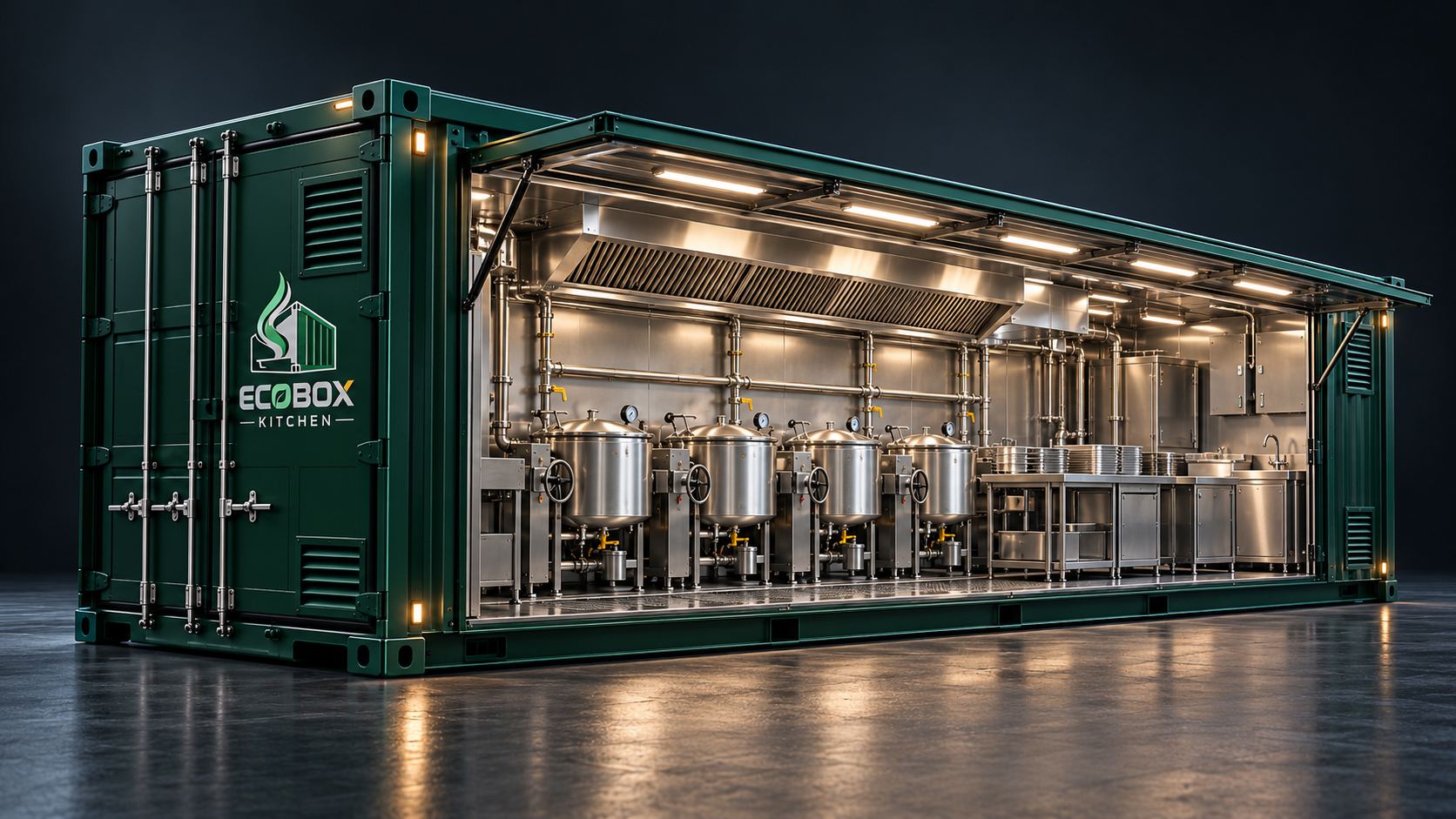 FIG 02Term service
Steam blanching, pasteurization, and curing for local farm co-operatives.
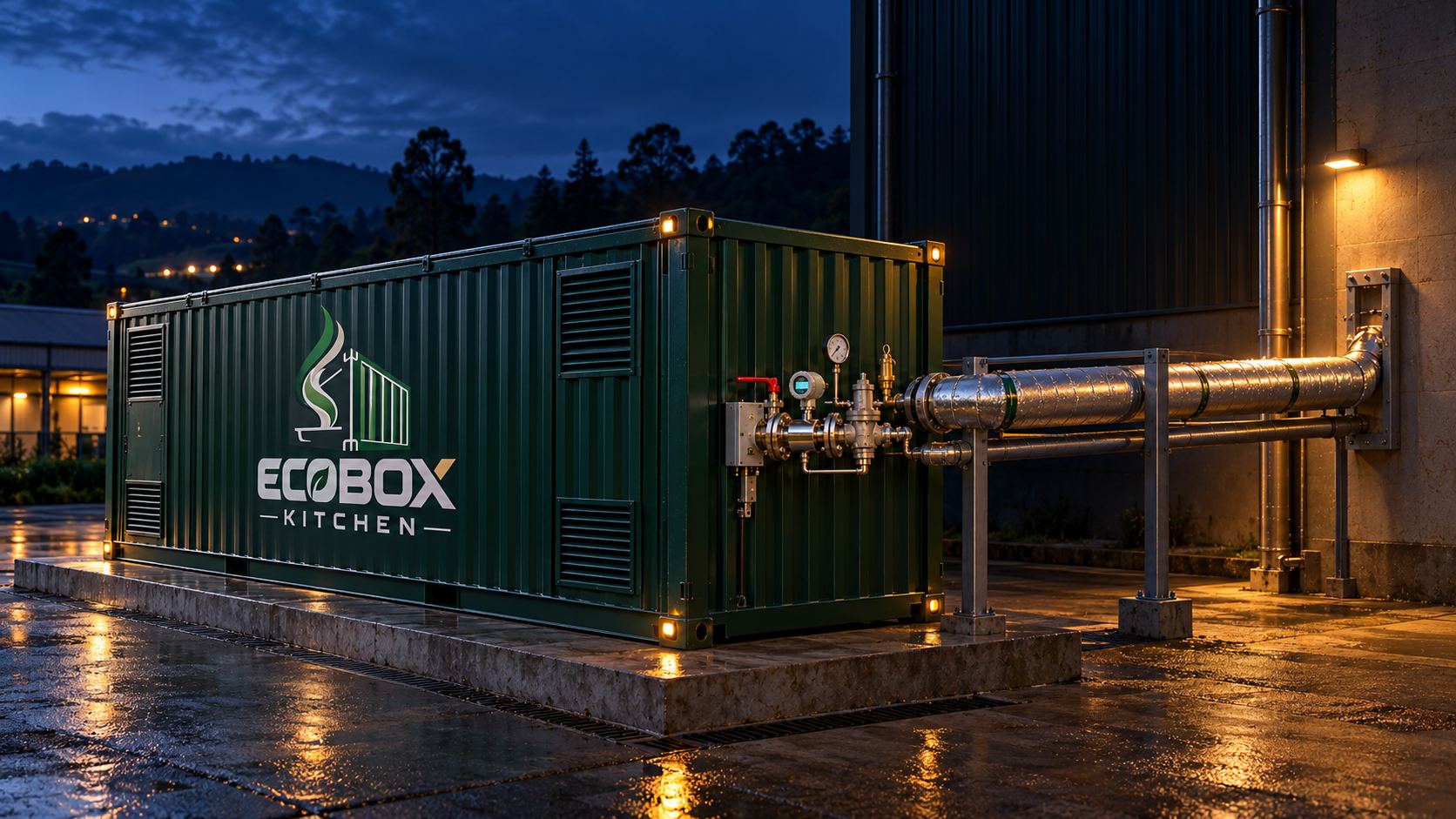 FIG 03Off-season load
The questions a credit committee asks, answered before the call.
School board, agricultural co-op, or lender: submit site details and we will assess the cluster.